
Workshop practice
Bricked ECU After a Failed Flash: A Calm Recovery Procedure
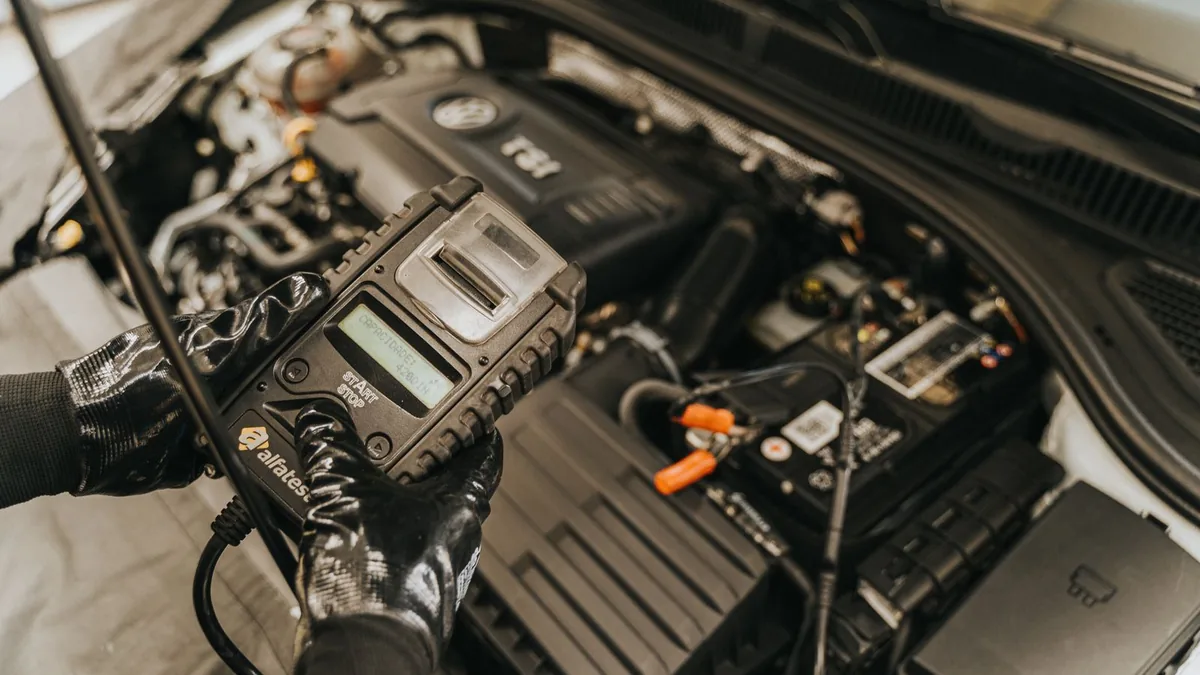
The progress bar stops at 63 percent. The tool reports a communication error, every warning light on the dashboard comes on and the car will not start. A failed write is frightening, but it is often recoverable, and the jobs that end badly tend to go wrong in the minutes after the failure rather than during it.
The first minutes: what not to do
Leave everything connected. Do not unplug the cable or close the tool's software. Do not start cycling the ignition to see what happens either. Many tools keep the interrupted job in memory and offer to resume or recover it, but only while that session is still alive.
Check the voltage next. If the supply sagged, that is probably why the write failed in the first place, and trying again on a tired battery will only repeat the failure, so put the car on a proper stabilised power supply and confirm the reading on the tool before you make a second attempt.
Why writes fail
- Voltage dropping during the write, usually because a battery charger was used instead of a power supply, or nothing at all.
- The laptop going to sleep or starting an update halfway through the write.
- A loose or damaged cable, or an OBD plug that moved when someone opened the driver's door.
- A file that does not match the ECU's software version or hardware, or one whose checksum was not corrected by the tool or the file service.
- Other modules on the network waking up and disturbing communication, on cars where the tool expects a quiet bus.
The fourth point is why our engineers check the read's software identification against the vehicle data before modifying anything at all, since a file that is perfect for one software version can leave a car unable to start on another, and no amount of care during the write will make up for that.
What "bricked" really means
Two quite different situations hide behind the same word. In the first, the calibration area is damaged but the bootloader, the small program that lets the ECU accept new software, is intact. The ECU may still answer the tool in a limited way, and it can usually be rewritten over OBD or on the bench.
In the second, the bootloader or the whole flash is corrupted, the unit no longer answers through the normal channels at all, and the way back is usually boot mode, where the tool talks to the processor directly and writes the complete memory from a backup taken before the job started, which is exactly why that backup matters so much.
A third case looks identical from the driver's seat but has nothing to do with software. A blown driver stage on the board or a pin bent while unplugging the connector will not be cured by any write, however many times you try. If the ECU stays silent even in boot mode, suspect the hardware.
A recovery order that usually works
- Resume or recover in the tool. Use the tool's own recovery function for the interrupted job, on stable power, before trying anything else.
- Write the original over OBD. If the bootloader survived, writing back the untouched original read is often enough to bring the car back to life.
- Move to the bench. Take the ECU out and connect on the bench, where the connection is steadier and the rest of the car cannot interfere.
- Use boot mode with the full backup. Write the complete original memory, not only the calibration area. This is the moment when a full backup taken before the job pays for itself.
- Stop and send it out. If boot mode fails too, a specialist with the right equipment has better odds than another hour of attempts on your bench.
Symptoms and the route they suggest
| What you see | Probable state | Start with |
|---|---|---|
| The tool still sees the ECU, the engine will not start | Calibration area incomplete | Tool recovery, then a rewrite over OBD |
| No OBD communication with the ECU, other modules answer | ECU software damaged | Bench connection and a bench write |
| No answer over OBD or on the bench | Bootloader or full flash corrupted | Boot mode with the full original backup |
| No answer in boot mode either | Possible hardware fault | Specialist repair or a replacement unit |
After it comes back
Do not hand the car back the moment it starts. Read and clear fault codes in every module, not only the engine, and then check, with the customer's key in your hand and the car still connected, that the immobiliser accepts the key and that coding and adaptations have survived the whole episode, because a car that starts in your workshop and refuses to start outside the customer's house is a worse outcome than the original failure. A throttle body or gearbox adaptation may have to be run again. Compare the software identification with the original read, so you know exactly what is in the ECU before you decide whether to try the tuned file again.
If you do try again, find out first why the write failed. Same conditions, same result.
How to avoid a bricked ECU
Recovery stories tend to begin with a step skipped at the start of the job. A stabilised power supply, a laptop with sleep and updates turned off, good cables and a complete backup of every memory before the first write remove most of the risk. Our checklist for a clean, complete ECU read goes through the details, and protected units such as the Bosch MG1 and MD1 deserve extra care, as our MG1 and MD1 unlock guide explains.
Every original you upload to our file service stays in the workshop panel, so a clean copy exists even when the laptop does not. If a write of one of our files fails, send the engineer the tool log and the exact message on the screen before you try again. That conversation is part of the support that comes with every file.
Frequently asked questions
Can a bricked ECU always be recovered?
Not always. When the damage is only in the software and you have a full original backup, recovery is usually possible with the tool's own functions or, failing that, in boot mode. Hardware damage on the board, or a corrupted unit with no backup, may need a specialist repair or a replacement ECU.
Do I need the original file to recover a bricked ECU?
It makes recovery far easier. A full backup of every memory, taken before the first write, lets you restore the ECU exactly as it was. Without one you depend on finding a matching file and on coding the unit to the car again.
Can I use a battery charger while flashing an ECU?
It is not a good idea. Chargers are built to charge, not to hold a steady voltage under a changing load, and some vary their output as the charge cycle progresses. Use a stabilised power supply designed for programming work.
More from the blog
- Bosch MG1 and MD1 Unlock: What It Means and How Workshops Handle It
- DPF Problems After a Remap? Check These Things Before Blaming the File
- KESS3 vs Flex vs Autotuner: Choosing a Tuning Tool for Your Workshop
- How to Start a Car Remapping Business Without Learning Everything the Hard Way
- How to Choose an ECU Tuning File Service: What Workshops Should Check
- Stage 1 vs Stage 2 Remap: What Changes and What Hardware You Need
- KESS3 Master or Slave? Choosing the Right Tool Setup for Your Workshop
- DSG Tuning Explained: DQ200, DQ250, DQ381 and DQ500 Gearboxes
- How to Learn ECU Remapping: A Realistic Training Path for Workshops
- Engine Remap on an Automatic: When the Gearbox Needs Its Own TCU File
- Pre-Tune Health Check: What to Log Before Remapping a High-Mileage Engine
- Before You Upload: How to Take a Clean, Complete ECU Read